Designing a Minimalist Bedroom in Under 300 Sq Ft

A small bedroom can still feel calm, comfortable, and beautifully designed. When you have less than 300 square feet to work with, every furniture choice, color, and storage solution matters. The goal is not simply to fit everything into the room—it is to create a space that feels open, restful, and easy to maintain.
Minimalist bedroom design makes this possible by focusing on what you need, reducing visual clutter, and choosing pieces that serve a clear purpose. With the right layout, thoughtful storage, and a restrained color palette, even a compact bedroom can feel like a personal retreat.
If you are designing a small apartment bedroom, a studio sleeping area, or a compact guest room, these practical ideas will help you make the most of every square foot.
1. Start with a Simple, Functional Layout
Before buying furniture or choosing decor, measure your bedroom. Note the location of doors, windows, wardrobes, electrical outlets, and any awkward corners. A clear floor plan helps you avoid furniture that makes the room feel cramped.
Begin with the essentials: a bed, suitable storage, and enough room to move comfortably. Position the bed where it allows the easiest access around the room without blocking natural light or doorways.
Whenever possible, keep the main walking path clear. Avoid filling every corner simply because it is available. In a small bedroom, a little open floor space can make a significant difference to how the room feels.
Try this: Sketch two or three possible layouts before committing to a furniture arrangement. Compare how easily you can reach the bed, open drawers, and move between the door and wardrobe.
2. Choose a Bed That Fits the Room
The bed is usually the largest piece of furniture in a bedroom, so its size has a major impact on the layout.
Choose the largest bed that fits your needs while leaving practical circulation space. A bed that is too large can dominate the room, while one that is too small may compromise comfort unnecessarily.
Consider these space-conscious options:
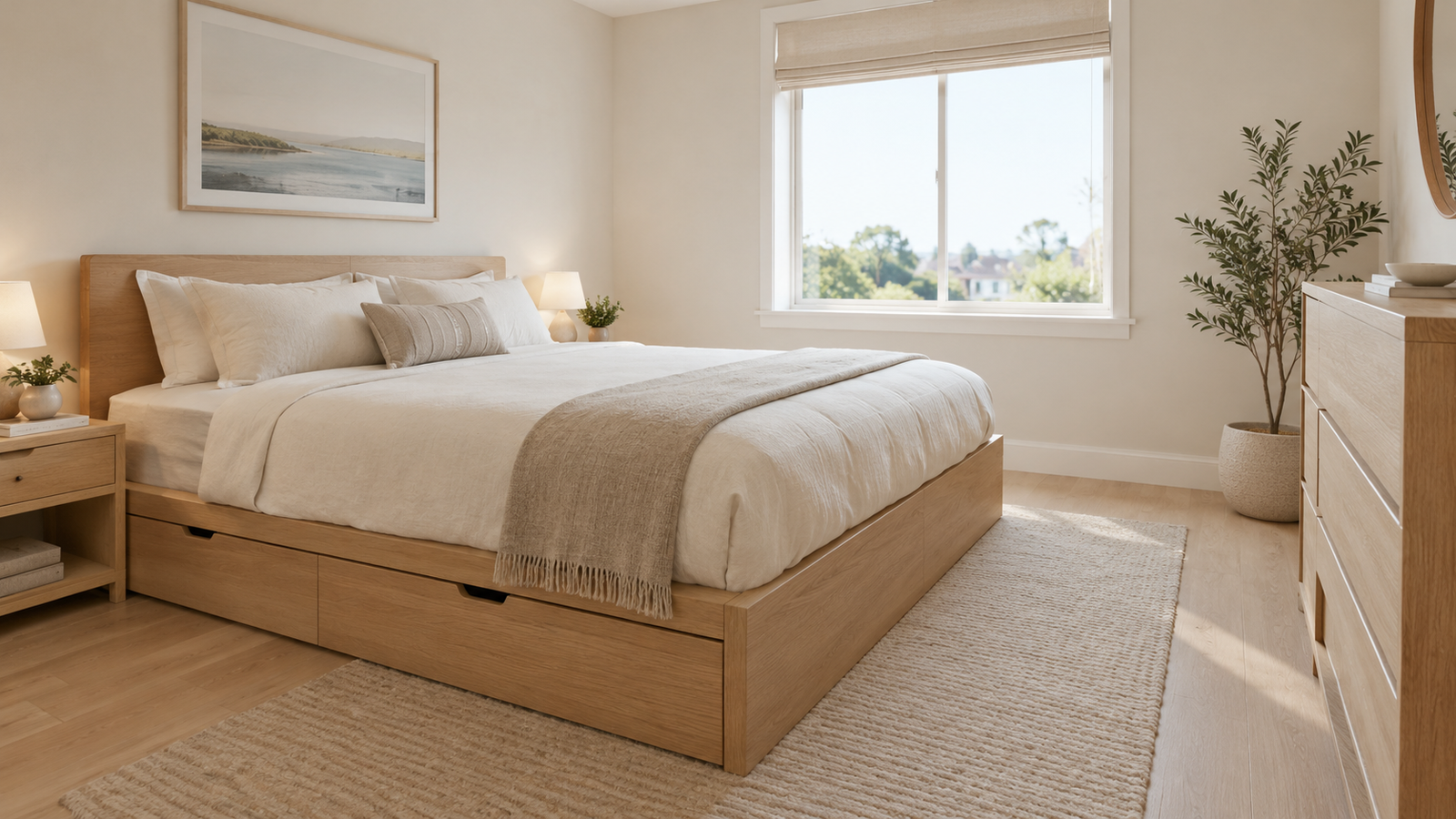
A bed with built-in drawers: Useful when you need extra storage for linens, clothing, or seasonal items.
A platform bed: Its simple profile can create a clean, uncluttered appearance.
A bed with open space underneath: A lighter-looking frame can make the floor feel more visible, particularly when the room is already crowded.
A wall bed or foldaway bed: Worth considering in a multipurpose studio where the sleeping area must serve another function during the day.
Check the complete dimensions of the bed frame, not just the mattress. Headboards, side rails, and footboards can add several inches to the footprint.
3. Use a Light, Cohesive Color Palette
A restrained color palette helps a small bedroom feel visually connected rather than busy. Warm white, soft ivory, pale beige, and light greige are useful starting points.
You do not need to make every surface white. Natural oak, muted olive, soft taupe, and charcoal accents can add depth without overwhelming the room.
For a balanced palette, try this combination:
Walls: Warm white or light ivory
Bedding: Cream, oatmeal, or soft beige
Furniture: Natural oak or another light wood finish
Accents: Muted olive, warm brown, or a small amount of charcoal
Keep large surfaces relatively consistent, then introduce variation through texture. Linen bedding, a woven rug, a wooden bedside table, and a soft wool throw can make the room feel layered without adding visual noise.
Remember that paint colors change with natural and artificial light. Test samples on different walls and observe them throughout the day before choosing a final shade.
4. Make Vertical Space Work Harder
When floor space is limited, look upward. Vertical storage helps keep everyday items accessible without taking up valuable walking space.
Useful options include:
Floating shelves above a desk or dresser
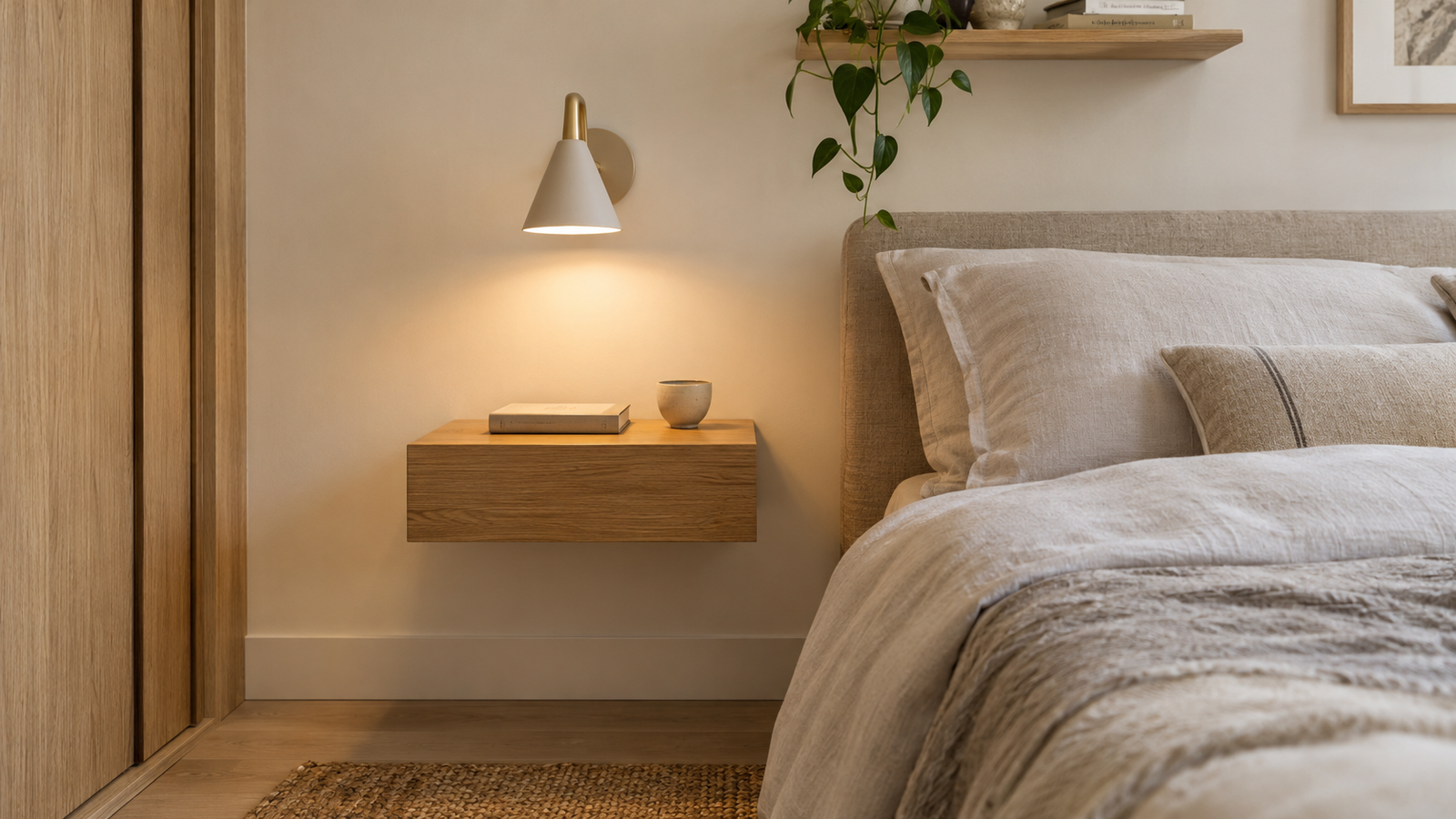
Wall-mounted bedside shelves instead of bulky nightstands
Tall, narrow cabinets for clothing and linens
Hooks behind the door for robes, bags, or frequently used accessories
Wall-mounted reading lights to free up bedside surfaces
Keep the arrangement intentional. Too many shelves filled with small objects can make a bedroom feel cluttered, even if the floor remains clear.
Place frequently used items within easy reach, and reserve higher shelves for occasional-use belongings. Secure wall-mounted furniture properly, particularly in homes with children or pets.
5. Build Storage Around the Bed
Under-bed storage can be especially valuable in a bedroom under 300 square feet. It uses space that might otherwise go unused and reduces the need for additional cabinets.
Choose storage according to what you need to keep:
Shallow drawers for clothing and accessories
Lidded containers for seasonal items
Fabric bags for spare bedding
Divided organizers for smaller belongings
If you prefer a clean, minimalist look, choose concealed drawers or matching containers rather than a collection of mismatched boxes.
Keep only items you actually use. Hidden clutter is still clutter, and overfilling under-bed storage can make it difficult to clean or retrieve things.
If your bed does not provide storage, consider a slim under-bed organizer before purchasing another piece of furniture.
6. Keep Bedside Furniture Small and Useful
Large nightstands can take up more room than you realize. In a compact bedroom, choose bedside furniture based on the tasks it needs to support.
A small floating shelf may be enough for a book, phone, and glass of water. A narrow table with one drawer can provide concealed storage without overwhelming the bed area.
For a minimalist finish, avoid using the bedside surface as a permanent collection point for chargers, cosmetics, books, and miscellaneous items.
Use a simple rule: keep the essentials visible and store everything else out of sight.
If you need two bedside surfaces, they do not have to be identical. A compact table on one side and a wall-mounted shelf on the other can work well when the room layout is asymmetrical.
7. Use Lighting to Create a Calm Atmosphere
Good lighting makes a small bedroom more functional and helps it feel inviting after dark. Rather than relying on one bright ceiling fixture, layer a few light sources for different purposes.
Consider three types of lighting:
Ambient lighting: General illumination from a ceiling fixture or soft wall lighting.
Task lighting: A reading light beside the bed or a focused light near a dressing area.
Accent lighting: Subtle illumination that adds warmth without becoming the room’s main feature.
Wall-mounted sconces or pendant lights can free up bedside table space. Choose warm-white bulbs for a relaxed evening atmosphere, and ensure task lighting is bright enough for reading.
During the day, keep windows as unobstructed as practical. Lightweight curtains allow natural light to enter while still offering privacy. If you need blackout coverage, consider a simple layered curtain arrangement.
8. Choose Decor with Intention
Minimalism does not mean a bedroom must feel empty or impersonal. It means each item should contribute to the room’s comfort, function, or character.
Instead of decorating every surface, choose a few pieces that matter to you:
One artwork above the bed
A ceramic vase on a dresser
A textured throw at the foot of the bed
A small plant near a suitable source of natural light
A mirror positioned to reflect available light
Pay attention to scale. One appropriately sized artwork can feel calmer than a crowded gallery wall, while a few larger accessories may look more cohesive than many tiny decorative objects.
Leave some surfaces empty. Negative space gives the eye somewhere to rest and allows the materials and shapes in the room to stand out.
9. Make the Room Feel Larger with Mirrors and Curtains
Mirrors can help a small bedroom feel brighter by reflecting light and creating a stronger sense of depth. A full-length mirror on a wardrobe door or a well-positioned wall mirror can be useful without requiring much additional floor space.
Avoid placing mirrors where they create unwanted glare or reflect an area you would rather keep private.
Curtains also influence how spacious the room appears. Hanging a curtain rod slightly above the window frame and allowing the fabric to fall close to the floor can create a taller visual line, provided the proportions suit the room.
Choose simple curtain fabrics and minimize heavy patterns. The aim is to make the window feel integrated with the room instead of turning it into a visually busy focal point.
10. Keep Clutter Under Control with a Simple Routine
A minimalist bedroom is easier to maintain when everyday items have a designated place. Without a simple system, even a well-designed room can quickly become crowded.
Build a few habits into your daily routine:
Make the bed each morning to give the room an immediate sense of order.
Return clothing to a wardrobe, laundry basket, or drawer rather than leaving it on a chair.
Clear bedside surfaces before going to sleep.
Put away items that do not belong in the bedroom.
Review stored belongings periodically and remove things you no longer use.
Use a small laundry hamper, a tray for daily essentials, and a drawer organizer if these solve real problems. Avoid buying organizers before you know what needs organizing.
The best system is one that feels simple enough to maintain even on busy days.
Common Mistakes to Avoid in a Small Minimalist Bedroom
A few design decisions can make a compact bedroom feel more crowded than it needs to be.
Choosing oversized furniture: Measure the footprint and consider how drawers, doors, and wardrobe panels open.
Using too many contrasting colors: Keep the main palette cohesive and add character through texture and a few considered accents.
Filling every empty wall: Unused space is not necessarily wasted space. Leave room for the eye to rest.
Relying on open storage for everything: Displaying too many belongings can create visual clutter. Mix a small amount of open shelving with concealed storage.
Buying organizers without decluttering: Sort belongings first so that storage is designed around what you genuinely need.
Ignoring comfort for appearance: A beautiful bedroom still needs a comfortable mattress, suitable lighting, practical access, and enough space to move around.
Frequently Asked Questions
1. How do I design a minimalist bedroom under 300 square feet?
Start with a functional layout, a suitably sized bed, and a cohesive color palette. Use vertical and under-bed storage, choose compact furniture, and keep decorative objects to a few meaningful pieces.
2. What colors work best in a small minimalist bedroom?
Warm white, ivory, pale beige, and light greige are versatile choices. Natural wood and muted accents can add warmth without making the space feel visually busy. The best shade depends on the room’s natural light and existing finishes.
3. Is a king-size bed suitable for a bedroom under 300 square feet?
It can be, depending on the room’s dimensions and layout. Measure the bed frame and leave adequate space to access the bed, open storage, and move safely. In a narrow room, a smaller bed may create a more practical layout.
4. How can I add storage without making the bedroom look cluttered?
Prioritize built-in drawers, under-bed containers, tall narrow cabinets, and wall-mounted shelves. Keep frequently used items accessible and conceal belongings that do not need to remain on display.
5. How do I make a small bedroom feel bigger without renovating?
Use a consistent palette, allow natural light in, keep the floor and main walking paths clear, and select furniture with appropriate proportions. Mirrors and simple window treatments can also improve the sense of openness.
6. Does minimalist design mean I should remove all decorations?
No. Minimalism is about intentional choices, not having an empty room. Artwork, plants, textiles, and personal objects can all belong when they add meaning or improve the space.
7. What is the best lighting for a compact bedroom?
Combine general lighting with focused reading lights and, where useful, subtle accent lighting. Warm-white light is often suitable for a relaxing bedroom, while task lighting should provide enough brightness for its specific purpose.
8. How do I keep a minimalist bedroom organized long term?
Give everyday items designated storage, return them after use, and periodically review what you own. A small daily reset is often easier to maintain than occasional, time-consuming decluttering sessions.

Make Room for Better Living
Designing a minimalist bedroom in under 300 square feet is not about squeezing as much furniture as possible into a small area. It is about deciding what matters, choosing pieces that work harder, and creating enough space for everyday life to feel comfortable.
Start with the layout, simplify the color palette, use storage thoughtfully, and let a few meaningful details bring personality to the room. Small changes can make a compact bedroom feel more functional, restful, and distinctly yours.
At A Little More Room Living, we believe a better home is not always a bigger one. Sometimes, it simply takes a little more intention.
Make Space for Better Living.